Many businesses in Malaysia are realising that their current content management system (CMS) feels like an outdated tool rather than a growth driver.
Updating pages takes too long, design changes break layouts, and pushing content across multiple channels feels messy.
This is where headless CMS adoption has gained attention, especially among B2B companies searching for flexible and future-ready enterprise CMS solutions.
But should your business make the leap? Let’s explore what headless means, why it matters, and how it could reshape your digital presence.
Table of Contents
Decoding the Buzz: What Is a Headless CMS?
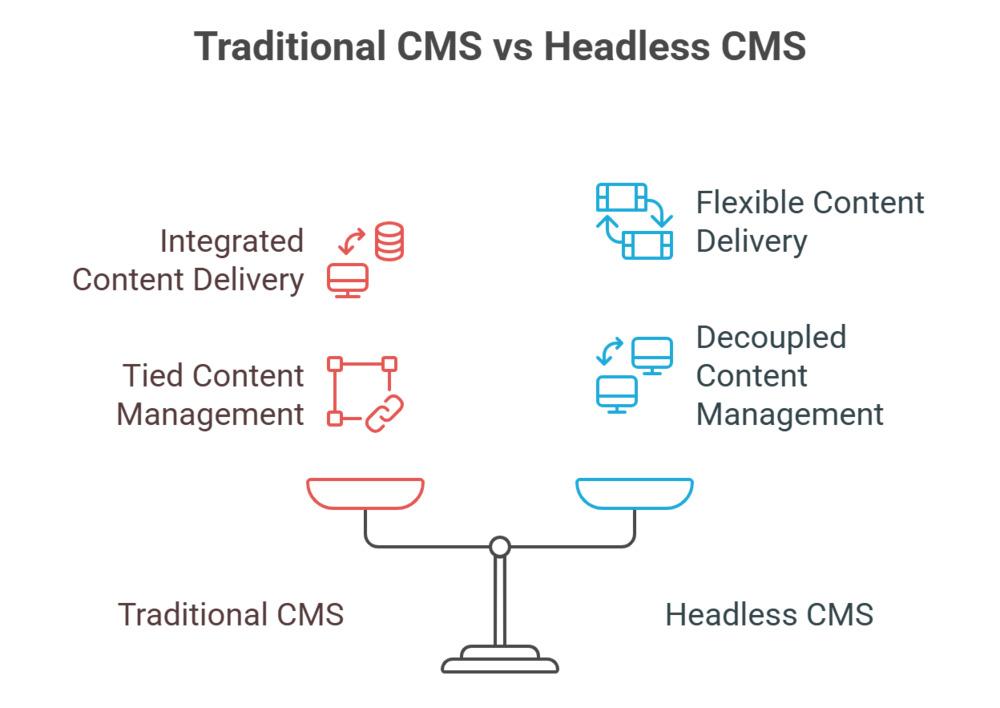
A headless architecture separates the “head” (the presentation layer) from the “body” (the backend content hub).
- Traditional CMS = content + design stuck together.
- Headless = content stored once, sent anywhere through APIs.
Think of it as content as a service. You create content once, then deliver it to your website, mobile app, smart displays, or even IoT devices. This separation is why some also call it a decoupled CMS.
Popular enterprise CMS platforms like Contentful, Strapi, or Sitecore offer this flexibility. Businesses can pair a sleek corporate website frontend with robust backend management, ensuring both creativity and control.
If you’re still weighing options between a simple website builder for small business and more advanced solutions, this guide can help you choose the right path before committing to a headless setup.
Speed, Scale & Flexibility: The Headless Advantage
Why are companies across Malaysia considering headless content management?
Here are the core benefits:
- Faster Performance: With an API-first CMS, developers can build lighter frontends. This improves load times, which directly boosts conversions and SEO visibility.
- Omnichannel Content Delivery: Publish once, distribute everywhere. Whether it’s your main website, an app, or a digital kiosk in a retail space, your brand messaging stays consistent.
- Scalability for Growth: Adding new features, microsites, or integrations doesn’t slow you down. Many platforms also offer multisite management for brands handling several properties.
- Improved Security: Since the backend and frontend are separated, there’s a smaller attack surface compared to traditional CMS systems.
- Seamless Integration: APIs connect your CMS with CRM, analytics, or digital asset management tools. That means smoother content operations and easier workflow management across teams.
A recent report by WP Engine found that 92% of enterprise businesses using headless CMS noticed improved agility in content publishing.
Ready to modernise your website with an SEO-first approach? Explore our web design & development services.
Why Headless CMS Matters for Malaysian Businesses
Malaysia’s market has unique challenges:
- Multilingual Audiences: A headless setup supports content governance across English, Bahasa Malaysia, and Mandarin without duplication headaches.
- Diverse Industries: Manufacturers and service providers might operate in very different ways, but both need digital experiences tailored to them. A headless CMS can adapt with the right content models.
- Omnichannel Demand: As businesses embrace WhatsApp Marketing and LinkedIn Ads, centralised content makes delivery more consistent across channels.
For B2B companies, agility is a competitive advantage. Imagine updating product information across your main site, sales app, and digital brochures at once instead of managing each separately.
For companies keen on exploring modern approaches, our insights on web development in Malaysia show how local businesses are adapting to new frameworks while balancing budgets and growth plans.
Who Should Seriously Consider Going Headless?
While it isn’t essential for every business, some industries gain immediate value from it :
| Industry | Use Case | Benefit |
| Real Estate Developers | Show property listings across web, app, and kiosks | Centralised updates for faster sales cycles |
| Retail & Wholesale | B2B portals with dynamic pricing | Simplifies eCommerce website experiences |
| Tech & SaaS | Content-driven apps & integrations | Better user experience with RESTful API flexibility |
| Manufacturing | Product catalogues for global buyers | Supports international SEO and localisation |
Interested in industry-specific strategies? Take a look at our E-Commerce website to see how we create scalable platforms.
The Flip Side: Is Going Headless Always Worth It?
While the advantages are compelling, it’s not a silver bullet. Challenges include:
- Higher Development Costs: Building a custom frontend requires skilled developers.
- Complex Integrations: APIs provide power but also add complexity during enterprise CMS deployment.
- Learning Curve: Teams need to adapt to new processes in content management frameworks.
This is why many companies work with agencies experienced in enterprise content management to reduce risks.
Should You Go Headless? Here’s How to Decide
Here’s a quick decision checklist for B2B leaders:
- Do you publish content across multiple channels?
- Is your current CMS slowing down your team’s output?
- Do you plan to scale regionally and need role-based permissions for bigger teams?
- Are you aiming for future-ready tech investments?
If most of these rings true, exploring enterprise CMS solutions is worthwhile.
Curious whether headless fits your strategy? Our SEO Services and Google Ads Campaigns work hand in hand with website development to ensure every investment drives ROI.
Go Headless, Stay Ahead
A traditional CMS can feel like a heavy anchor in today’s fast-moving digital world. A headless CMS opens the door to speed, flexibility, and omnichannel content delivery, positioning your business for growth in Malaysia and beyond.
By working with Newnormz, brands have transformed their rigid sites into future-ready platforms, which improves performance and visibility. Don’t let your digital infrastructure limit your potential.
Contact Newnormz today and let’s craft a website that works harder for your business.