Digital hoarding can hurt your SEO. Publishing excessive articles doesn’t always boost visibility; in fact, it can harm your search engine performance.
Just like pruning dead branches helps a tree grow, content pruning clears away low-quality pages, boosting site health and improving rankings.
Let us guide you through identifying and removing irrelevant content to ensure your site’s authority stays strong and focused.
Table of Contents
The ROI of Less: Why Content Pruning Works

You might feel hesitant to delete work you paid for or spent hours writing. We get it. Yet, shrinking your site size often leads to massive gains in organic traffic. Here’s why smaller is often better.
1. Crawl Budget Optimisation
Googlebot doesn’t have infinite time. It assigns a crawl budget to every website. Thousands of useless URLs mean the bot spends its limited budget wandering through outdated archives instead of indexing your new, high-value content.
You want Google to focus on your “money pages” rather than crawl waste. Strategic SEO services Malaysia approaches prioritise crawl efficiency to maximise your site’s potential.
2. Concentrating Link Equity
Think of your website authority like a bucket of water. Every page punches a hole in the bucket, letting the “link juice” flow out.
Internal link equity spreads too thin when you have too many pages. By removing low-value pages, you plug those leaks and redirect authority to the content that actually converts.
3. Enhanced User Experience
Users hate landing on a 404 error or an article with advice from 2015. Pruning ensures every click leads to fresh, relevant information. It forces you to address the content quantity or quality Malaysia debate businesses face daily. Quality must always win.
Identifying the “Dead Wood”: What to Target
You can’t simply start deleting random posts. You need a strategy to identify underperforming content. We look for three specific types of pages that usually cause content bloat.
| Page Type | Characteristics | The Fix |
| The Zombie Pages | Zero traffic, zero backlinks, and zero conversions over the last 12 months | Delete these or mark them as “Noindex” if they serve a legal purpose |
| The Keyword Cannibals | Multiple articles targeting the same search intent, confusing Google about which one to rank | Merge these into one comprehensive “Power Post” to resolve keyword cannibalisation |
| The Time Travellers | Outdated content that was relevant years ago but is now factually incorrect | Update the statistics or repurpose content into a new format |
Spotting Thin Content
Pages with very few words or no real value add are thin content. These often occur when you have multiple tag pages or empty category pages. If a page doesn’t answer a user query effectively, it needs to go.
Before you delete anything, check the topic against Google trends Malaysia. Sometimes a topic seems dead but is actually about to trend again.
Working with Newnormz, digital marketing agency helps identify which topics deserve revival and which truly need elimination.
The 4-Step Content Audit & Pruning Framework
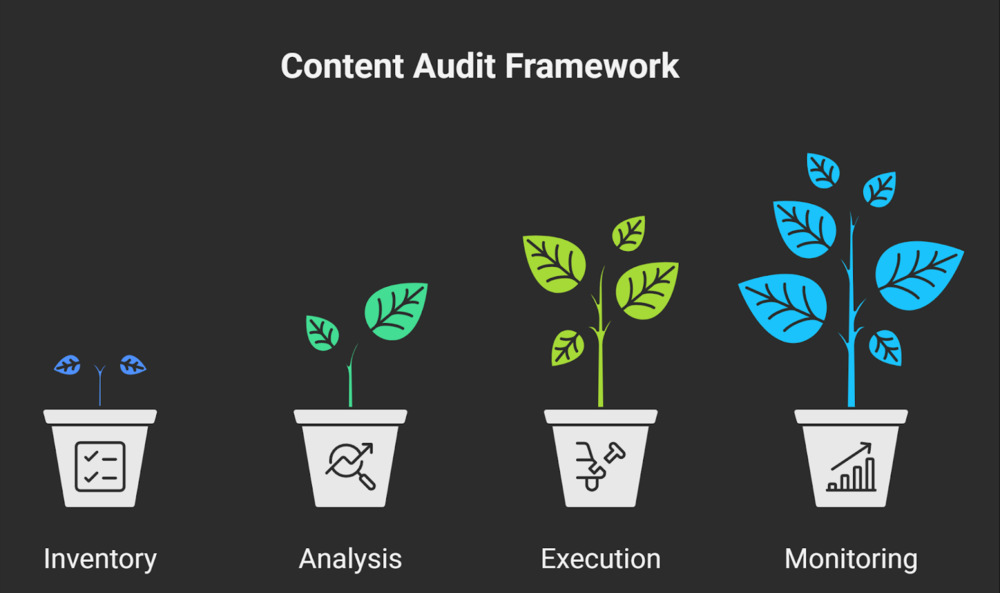
A successful content audit requires organisation. Follow this framework to clean up your site architecture without breaking anything.
Step 1: Inventory
You need a full list of every URL on your domain. Tools like Google Search Console and Ahrefs can generate a content database for you. This list acts as your master sheet for the project.
Having a well-structured corporate website foundation makes this inventory process significantly smoother.
Step 2: Analysis
Look at the metrics for each URL. Check the traffic, backlinks, and conversions. Categorise every page into one of four actions:
- Keep: The page performs well
- Improve: The content is good but needs a refresh (perfect for SEO content writing Malaysia upgrades)
- Merge: Combine two similar pages to fix duplicate content
- Delete: The page has no value
Businesses exploring AI micro content strategy can streamline this analysis phase, using automation to identify patterns across hundreds of URLs quickly.
Step 3: Execution
This serves as the technical phase. If you delete a page that has backlinks, you must use 301 redirects to point that old URL to a relevant existing page. This preserves your link juice. For pages with absolutely no value and no links, you can use a 410 (Gone) tag.
Implementing local SEO strategies alongside pruning ensures your location-specific pages maintain their ranking power during the cleanup process.
Step 4: Monitoring
Track your search engine rankings after the prune. You should see a “bounce” in authority as Google recognises your site quality has improved. If you merged pages, ensure the new URL maintains the topical authority of the old ones.
4 Pro Tips for a Safe Pruning Strategy

Pruning carries risks if you’re careless. You might accidentally delete a page that drives revenue. Here’s how to keep your strategy safe.
1. Don’t Delete Your Conversion Drivers
Low traffic doesn’t always mean low value. A “Request a Quote” page might only get ten visits a month, but if five of those visitors become clients, you must keep it. Always review your content monetisation tactics before hitting delete.
Pages generating leads through Google Ads or Google Display Ads campaigns deserve special attention. Even with minimal organic traffic, they might convert paid traffic effectively.
2. Internal Link Cleanup
Once you remove a URL, you create a broken link anywhere else on your site that pointed to it. You must update your internal linking structure. Leaving users on a dead end creates a poor experience and hurts crawl efficiency.
3. The “Noindex” Alternative
Sometimes you need to keep a page for users, such as a privacy policy or a specific landing page for ads. You can use meta robots tags to tell Google “NOINDEX” while keeping the page live for humans.
If you’re unsure about removing a piece of content, consider if you can change the format. Learning how to repurpose content allows you to save the core message while updating the medium, perhaps turning a blog into video content or an infographic.
4. Handle URL Parameters
E-commerce sites often generate thousands of URLs for filters like colour or size. These cause massive duplicate content issues. Use canonical tags to tell Google which version is the master copy.
Platform-specific content like TikTok marketing material might underperform on your website but excel on social channels. Rather than deleting, consider redistributing content where your audience actually engages.
Prune Now, Rank Higher Tomorrow
Content pruning is a quarterly hygiene habit, not a one-time fix. The digital landscape shifts rapidly. Strategies that worked in 2023 might be obsolete by 2026. Monitoring social media trends Malaysia 2026 helps you decide which topics deserve to stay alive.
Schedule mini audits every three months to catch content gaps and eliminate what no longer serves your audience.
Integrating content marketing best practices with regular pruning keeps your site lean and conversion-focused. Social media marketing amplifies your strongest content while pruning removes what fails to resonate.
When did you last check your “last page” of search results? It might be time for a trim.
Frequently Asked Questions