
Your competitors are showing up inside ChatGPT, Google’s AI Overviews, and Perplexity. You are not. The gap between them and you often comes down to one technical detail: FAQ schema.
Many Malaysian SME owners exploring SEO services still overlook structured data, even though it has become one of the clearest ways to help search engines understand a page. Google no longer only ranks pages. It reads, summarises, and surfaces direct answers at the top of search results.
FAQ schema gives search engines and AI tools a clearer signal that your page answers the questions real users are asking.
This approach helps your business improve search visibility, strengthen answer engine readiness, and make your website easier for Google and AI platforms to interpret.
Table of Contents
What Is FAQ Schema and Why Does It Matter for SEO?
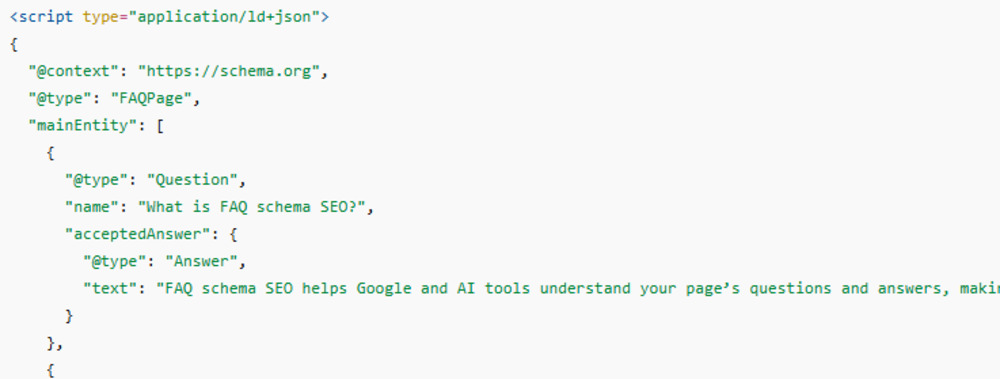
FAQ schema helps Google and AI tools understand the questions and answers on your page more clearly. Instead of treating your FAQ section as normal text, structured data tells search engines, “this is a direct answer to a real user question.”
That matters because search results are no longer limited to blue links. Google can pull answers into rich results, AI Overviews, and other search features when your content is clear, structured, and relevant.
For example, someone searches “how long does SEO take to work in Malaysia.” A well-structured FAQ answer can help your agency appear closer to the decision-making moment, before the user even clicks into a website.
For Malaysian SMEs, this creates an opportunity many competitors still miss. Most businesses are still chasing keyword rankings only. FAQ schema adds another layer of visibility by helping your content become easier for search engines and AI platforms to read, trust, and surface.
Book a free website audit call with Newnormz today. Our SEO specialists will review your structured data, spot missed FAQ schema opportunities, and show you where your site can gain stronger search visibility.
How FAQ Schema Connects to AI-Powered Search Results
AI search is changing the way customers compare businesses. Users now get direct answers inside Google AI Overviews, Bing Copilot, Perplexity, and ChatGPT-style results before they even open a website.
FAQ schema helps your content enter that answer layer.
| Factor | Standard On-Page SEO | FAQ Schema SEO |
| Organic ranking | Targets keywords across headings, body, and metadata | Reinforces topical relevance through structured Q&A signals |
| SERP real estate | Blue link with title and meta description | Expandable Q&A rich results directly in search |
| AI search visibility | Possible if content is well-structured | Significantly higher when schema is correctly implemented |
| Content format | Prose, bullets, and headings | Paired questions and answers in JSON-LD |
| Implementation effort | Ongoing content optimisation | One-time technical setup with periodic updates |
A properly structured FAQ section gives search engines clear question-and-answer blocks that are easier to read, extract, and reference. Each answer becomes a stronger signal that your page can respond to a specific buyer query.
AI tools tend to favour content that is:
- Clear and easy to scan
- Directly matched to user questions
- Supported by relevant page context
- Structured in a way search engines can understand
Malaysian businesses using FAQ schema can answer customer questions earlier in the search journey. Before someone fills in a form or calls your team, your content may already be shaping their decision, filtering stronger leads, and building trust in your brand.
4 Areas to Build a Strong FAQ Schema Implementation
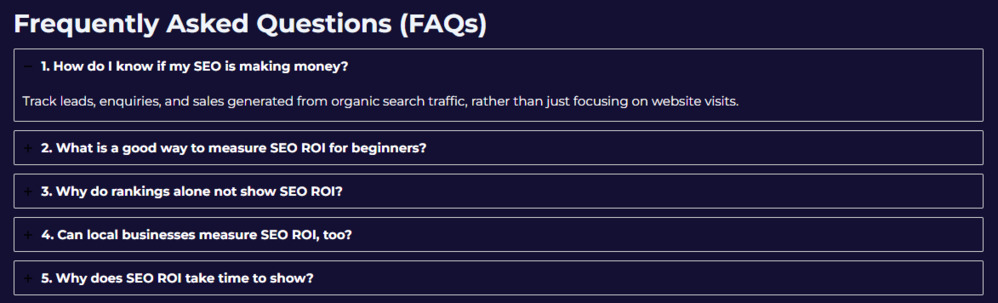
Adding FAQ schema to your site requires proper planning and accurate implementation. The structure has to be correct, the questions should match real search intent, and the answers need to show credibility. Weak or generic FAQ content will not perform even when schema is already in place.
A proper implementation covers these areas:
1. Question Selection Based on Search Data
The questions in your FAQ schema must reflect what your target audience actually searches for. Tools like Google Search Console, People Also Ask data, and keyword research platforms surface the exact phrasing your customers use. Guessing at questions is one of the most common mistakes businesses make.
2. Answers That Are Specific to Your Business
Generic answers do not get cited. AI engines and Google favour answers that contain specific, verifiable details. For a Malaysian digital marketing agency, an answer about ‘how much does SEO cost in Malaysia’ needs to include realistic figures, context, and a clear next step, not a vague ‘it depends.’
3. Correct JSON-LD Markup
The schema must follow Google’s structured data guidelines exactly. Missing properties, incorrect nesting, or duplicate question IDs will prevent the markup from being read correctly. Validation through Google’s Rich Results Test is a non-negotiable step.
4. Placement on the Right Pages
FAQ schema performs best on service pages, landing pages, and long-form blog content where decision-stage questions naturally arise. Applying it across every page without strategy dilutes the signal and can trigger spam filters.
Speak to Newnormz for a website audit and discover how FAQ schema, content structure, and technical SEO improvements can support stronger visibility across Google and AI answer platforms.
4 Common Mistakes Malaysian Businesses Make with FAQ Schema
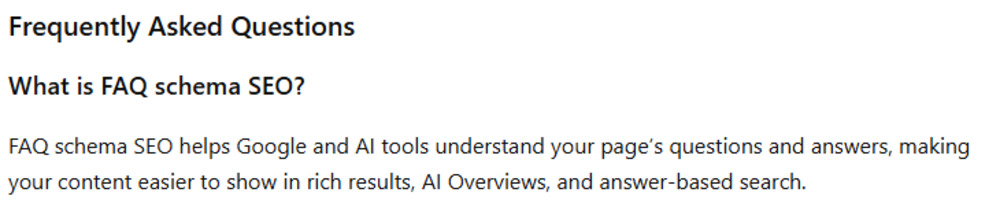
Most FAQ schema implementations fall short because they treat it as a box to tick rather than a content strategy. The mistakes below are the ones Newnormz encounters most often when auditing client websites.
1. Copying generic answers from competitors.
Search engines can identify thin or duplicate content. Your answers need to reflect your business’s actual expertise and local context.
2. Adding schema without matching on-page content.
The questions and answers in your schema markup must match what appears visibly on the page. Schema that does not reflect the actual content violates Google’s guidelines and risks manual penalties.
3. Neglecting schema after the initial setup.
Search intent evolves. FAQ content that was relevant six months ago may no longer match how customers phrase their questions today. Schema needs to be reviewed as part of regular SEO maintenance.
4. Applying schema to every page indiscriminately.
FAQ schema is most effective on pages where users are evaluating a decision. Applying it to every page on your site without strategy reduces its impact on the pages where it matters most.
Find out ways to build your AI overview optimisation in Malaysia, how to rank in Google Gemini, and implement LLM SEO optimisation with brand mention for SEO and GEO.
How Newnormz Helps SMEs Fix Structured Data Gaps

Digital marketing agency, Newnormz helps close that gap through structured data SEO. Our team reviews your existing pages, identifies where FAQ schema can support stronger search visibility, and restructures your content so search engines can understand the answers your business already provides.
We handle the full process, including question research, FAQ content refinement, schema implementation, technical checks, and ongoing optimisation. This helps your website become easier to read, easier to cite, and more prepared for Google AI Overviews, People Also Ask, featured snippets, and other AI-powered search results.
Every engagement starts with a free website audit. Newnormz reviews your current technical SEO setup, checks where structured data is missing or incorrectly implemented, and maps out the priority fixes needed to improve your search and AI visibility.
Learn more about our SEO services and SEO packages that align with your needs and budget.
Turn FAQ Schema Into Search Visibility Before Your Competitors Catch Up
Google, AI Overviews, and conversational search tools are changing how customers discover businesses. FAQ schema helps your website send clearer signals to search engines, making your answers easier to read, rank, and reference.
Many Malaysian SMEs still treat FAQ sections as basic website content. This creates a gap for businesses that act early. Clear questions, strong answers, and proper schema implementation can help your content appear closer to the point where customers are comparing options and making decisions.
Newnormz helps Malaysian businesses turn that opportunity into action. We review your current SEO setup, check your structured data, identify missing FAQ schema opportunities, and map out the fixes that can support stronger visibility across Google and AI-powered search.
Book your free website audit call with Newnormz and start building visibility where decisions now happen.
Frequently Asked Questions About FAQ Schema in Malaysia

As the Core Strategists at Newnormz, we don’t just follow digital trends, we engineer them. Our team bridges the gap between technical precision and creative growth, ensuring that every SEO campaign, ad spend, and web interface serves a single purpose: scaling your business with measurable ROI. By blending data-driven insights with a deep understanding of market psychology, we transform digital presences into high-performance engines. At Newnormz, our strategy is simple: Think bigger, optimize faster, and lead the norm.