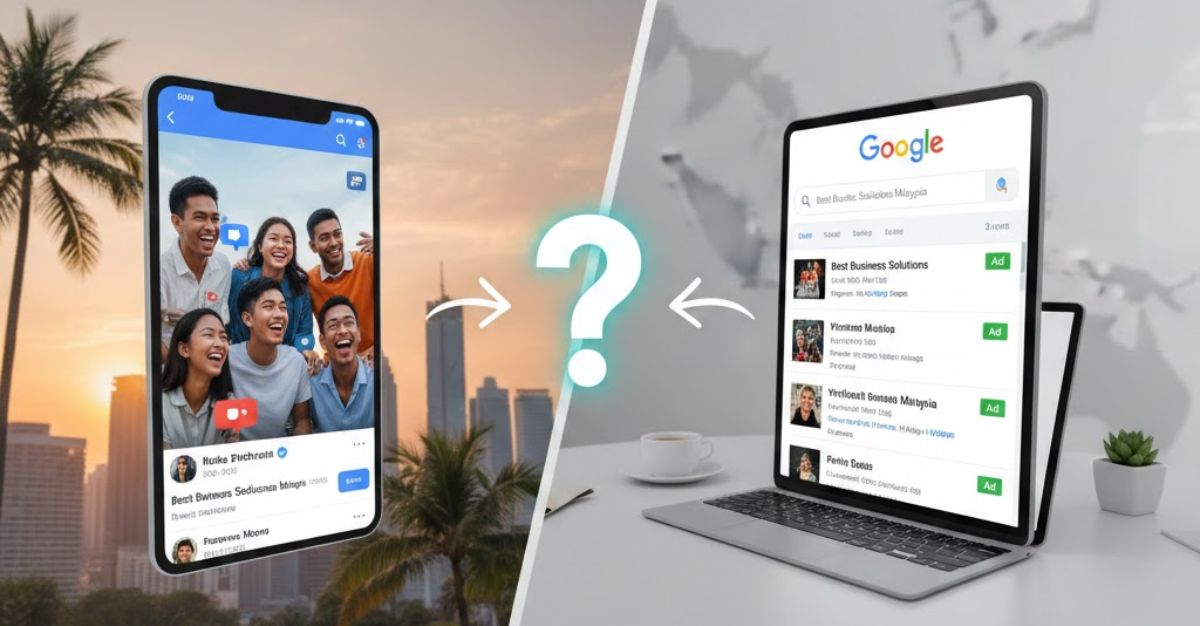
Businesses across Malaysia face a critical question when planning their digital marketing strategy: should you invest in social media ads vs Google ads?
Both platforms promise results, but they work in fundamentally different ways. One captures attention whilst people scroll through their feeds, the other intercepts customers actively searching for solutions.
The truth is, picking the wrong platform can drain your budget without delivering the outcomes you need.
This guide breaks down everything you need to know about these two advertising powerhouses, helping you make a smart decision for your business in Malaysia’s competitive digital landscape.
Table of Contents
Understanding the Basics: Social Media Ads vs Google Ads
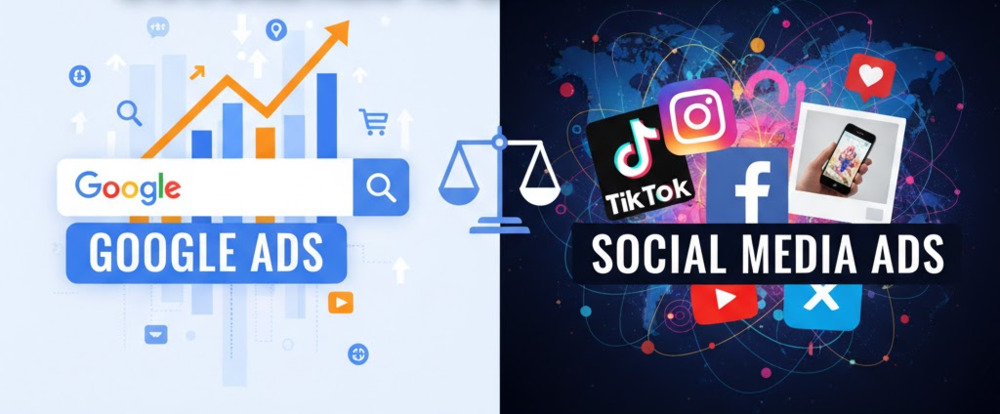
Before diving deeper, it’s important to understand the basics of each platform and how they serve your business objectives.
What Are Social Media Ads?
Social media adverts are displayed on platforms such as Facebook, Instagram, LinkedIn, and TikTok, appearing directly within users’ feeds as they consume content.
The main advantage of these platforms is their highly detailed audience targeting. You can reach users based on specifics like age, location, interests, job roles, and recent online activity.
To illustrate, a café in Bangsar can target coffee enthusiasts within a 5km radius, and a B2B software firm can reach specific IT managers across Kuala Lumpur.
Explore our social media marketing services to connect with your audience in a way that creates lasting engagement.
What Are Google Ads?
Google Ads puts your business in front of people at the exact moment they search for what you offer.
Your ads can appear on search engine results pages, YouTube, and across millions of websites in the Google Display Network.
The platform uses keyword targeting to match your ads with user searches. When someone types “best accounting software Malaysia” into Google, your ad can appear right at the top of the results.
How Google Ads & Social Media differs from each other?
Here is the compression between social media ads & Google Ads :
| Factor | Social Media Ads | Google Ads |
| User Intent | Passive browsing | Active searching (high purchase intent) |
| Targeting Method | Interest-based targeting, demographics | Keyword targeting, search intent |
| Best For | Brand awareness campaigns, engagement | Lead generation, direct sales |
| Ad Formats | Creative ad formats: images, videos, stories | Text ads, shopping ads, display banners |
| Typical Cost-per-click | Lower CPC, varies by platform | Higher CPC in competitive industries |
| Results Timeline | Builds momentum over time | Immediate results possible |
Pros and Cons of Social Media Ads for Malaysian Businesses

For Malaysian businesses striving to capture the attention of a digital-first population, social media advertising presents a powerful yet complex landscape of opportunities and challenges that requires careful navigation.
a. The Advantages
Social media platforms excel at connection, flexibility, and visual performance:
- Community Building: Social media is highly effective at creating deep connections and loyal fanbases.
- Budget Flexibility: Advertisers have remarkable control over spending.
- Visual Performance: Highly visual content performs brilliantly, capturing attention mid-scroll.
To build strong connections and expand your reach through visual content, consider our Instagram Ads or Facebook Ads services to drive engagement and brand visibility
b. The Drawbacks
Social media ads face distinct challenges, primarily related to user intent and content demands:
- Lower Purchase Intent: Conversion rates often lag behind search ads because users are browsing, not actively seeking to buy. Engagement (likes, saves) doesn’t guarantee immediate purchase.
- Ad Fatigue Risk: Showing the same ad repeatedly leads to audience burnout, resulting in your audience ignoring the content. This requires a constant need for fresh creative content and ongoing design resources.
- Engagement vs. Sales Gap: High metrics like likes and shares do not always translate into actual enquiries, purchases, or high-quality leads.
Pros and Cons of Google Ads for Malaysian Businesses
As for Malaysian businesses seeking to capture customers at the precise moment of purchase intent, Google Ads offers an unparalleled tool for driving conversions, though it demands a strategic approach to navigate competitive costs and technical nuances.
The Strengths
Google Ads excels at capturing immediate buyer intent and providing measurable returns, making it highly effective for driving sales.
- High Buyer Intent
- Google captures users at the exact moment they are searching for solutions or products.
- Audiences are actively looking, which increases the likelihood of conversion.
- Superior Click-Through Rates (CTR)
- Well-optimised search ads typically outperform social platforms in CTR.
- This happens because ads match directly with explicit user demand.
- Clear ROI Tracking
- Google Ads offers precise, transparent performance data.
- You can easily identify which keywords and campaigns drive sales or conversions.
The Challenges
While effective for conversion, Search Ads present specific challenges related to cost, complexity, and brand building.
- Escalating Costs
- Advertising expenses rise quickly in competitive sectors like legal, insurance, and property.
- High-demand keywords often exceed RM10 per CPC, increasing overall campaign costs.
- Steeper Learning Curve
- Google Ads requires strong technical skills to manage effectively.
- Businesses must understand Quality Score, keyword targeting, ad extensions, and advanced bidding strategies to stay competitive.
- Google Ads requires strong technical skills to manage effectively.
- Need for Specialisation
- The platform’s complexity pushes many businesses to hire specialists or agencies.
- Professional management becomes essential to maximise ROI and avoid wasted ad spend.
- Slower Brand Visibility
- Search ads prioritise users with immediate purchase intent.
- They do not provide broad, repeated exposure needed for fast brand awareness compared to social platforms.
How to Choose the Right Platform for Your Business
Choosing the ideal advertising platform for your business requires evaluating three critical factors: your specific goals, target audience, and available resources.
a. Define Your Business Goals
Start by getting crystal clear on what you want to achieve.
Building brand awareness amongst young Malaysians? Social media offers unmatched reach on platforms like TikTok and Instagram.
Need immediate lead generation from people actively seeking your service? Google’s search ads deliver faster results.
b. Understand Your Target Audience
Your customers’ online behaviour should guide your choice. A skincare brand targeting women aged 25-40 might find Instagram delivers exceptional engagement, whilst a commercial refrigeration company would capture more qualified leads through Google searches from restaurant owners.
c. Consider Your Budget and Resources
Social media ads often require lower minimum spend but demand consistent content creation. You need someone creating graphics, writing copy, and responding to comments.
Google Ads can work with various budgets, but competitive keywords may require RM50-100 daily to see meaningful results. The platform needs less creative work but more technical knowledge for campaign optimisation.
Combining Both Platforms: The Full-Funnel Strategy
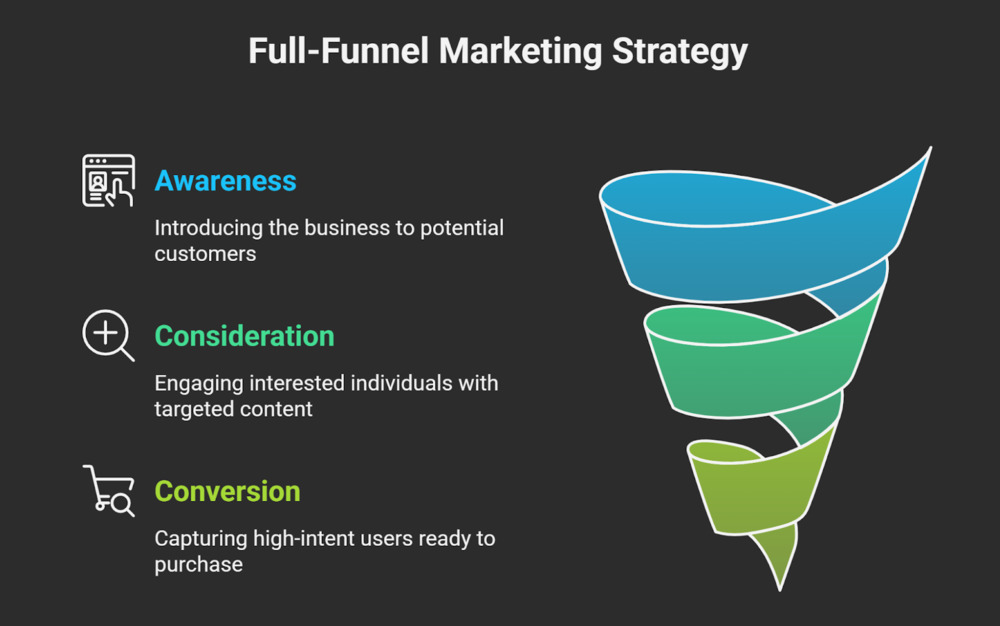
The smartest Malaysian businesses don’t choose one over the other. They use both platforms strategically:
1. Top of Funnel: Awareness
Run brand awareness campaigns on Instagram and Facebook to introduce your business to potential customers. Share valuable content, behind-the-scenes videos, and customer stories.
2. Middle of Funnel: Consideration
Use Google Display Network and social media retargeting to stay visible to people who’ve shown interest. Show them testimonials, product comparisons, and special offers.
3. Bottom of Funnel: Conversion
Deploy Google Search Ads to capture high-intent users ready to purchase. Target specific product searches and location-based queries to drive immediate sales.
This approach to search engine marketing ensures you’re reaching people at every stage of their buying journey.
A furniture retailer might use Instagram to showcase room makeovers, retarget viewers with Google Display ads, and capture purchase-ready customers searching “buy sofa Klang Valley”.
For a comprehensive approach that blends both platforms effectively, check out content marketing to create content that nurtures customers through every stage of the funnel.
Make the Right Choice for Your Business: Get Started Today!
Both social media ads and Google Ads play key roles in your digital marketing strategy. Choose social media for budget-friendly brand visibility and engagement, and Google Ads for targeting high-intent customers and quick conversions.
Test both platforms for a month, track your performance, and find what works best for your business.
Starting with one platform and mastering it can help you optimise your budget and understand market dynamics. In a competitive landscape, make your move quickly to stay ahead.
Related Readings :
- Top 10 Google Ads Agencies in Malaysia
- Top 10 Social Media Management Agencies in Malaysia
- Top 10 Social Media Trends in Malaysia for 2026
Frequently Asked Questions